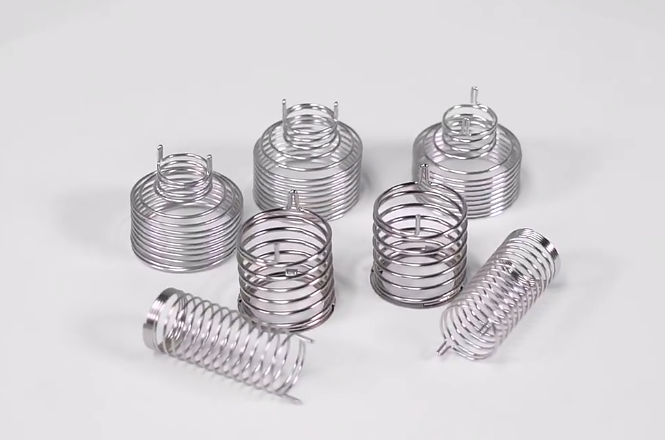
A touch spring is a flexible, small-scale mechanical component often used in electrical devices, machini, and other industrial applications. It serves as a contact mechanism, enabling connectivity, flessibilità, and resilience in various systems. Below is an Guida Ultimata to touch springs, including their types, functions, applicazioni, è materiali.
What is a Touch Spring?
A touch spring is a spring-like device designed to:
- Ensure cuntattu elettricu in devices.
- Provide elasticity and pressure for reliable operation.
- Absorb mechanical shock or vibration.
- Support motion control and alignment.
Touch springs are typically made of conductive metals and used in systems requiring repetitive compression or flexion.
Key Features of Touch Springs
- Small Size and Flexibility: Designed for compact environments with intricate configurations.
- Durable Material: Made of high-strength, fatigue-resistant metals like stainless steel, beryllium copper, or phosphor bronze.
- High Conductivity: Ensures reliable electrical connectivity in circuits.
- Elastic Properties: Maintains consistent pressure and functionality over multiple cycles.
- Resistenza di corrosione: Coated with anti-corrosion layers for durability.
Common Types of Touch Springs
1. Compression Touch Springs
- Provide forza lineari when compressed.
- Commonly used in battery contacts, interruttori, è connettori.
2. Contact Touch Springs
- Used in cuntatti elettrici where current needs to flow reliably.
- Found in relays, interruttori, and circuit boards.
3. Wave Springs
- Compact, flat springs with wave-like ridges.
- Used in tight spaces to save axial space and reduce weight.
4. Torsione di Torrore
- Provide a twisting force.
- Found in devices like rotary connectors or actuators.
5. Cantilever or Leaf Touch Springs
- Flat, flexible strips used in switch mechanisms.
- Provide spring-back motion when deflected.
If you're looking for custom stainless steel touch springs from a China supplier, here’s a comprehensive guide to help you find the right supplier and ensure the quality and specifications meet your requirements.
Key Features of Stainless Steel Touch Springs
- Materiale: High-quality stainless steel, commonly types:
- SUS304: U scopu generale, corrosion-resistant.
- SUS316: High corrosion resistance, ideal for harsh environments.
- SUS301: High elasticity, often used in spring applications.
- Customizable Designs:
- Various shapes (flat, spirale, wave, o torsione).
- Tailored dimensioni (spessore, larghezza, è lunghezza).
- Specific tolerances and load capacities.
- APPLICAZIONI:
- Elettronica: Battery connectors, interruttori, relays.
- Macchine industriale: Contacts in motors and transformers.
- Automotive: Ignition switches, sensors.
- Trattamenti di superficia:
- Polishing for smooth finishes.
- Electroplating with gold, nichel, or silver for better conductivity and oxidation resistance.
- Passivazione to enhance corrosion resistance.
Why Choose a Supplier from China AS LINSPRING ?
China is a hub for customized touch spring manufacturing, LINSPRING offering:
- Prezzi competitiva: Cost-effective solutions due to large-scale manufacturing.
- Advanced Manufacturing: Access to cutting-edge CNC machines and laser cutting technology.
- Customization Options: Highly flexible production lines for specific designs.
- Spedizioni glubale: LINSPRING manufacturing experienced in exporting to various countries.
How to Vet Suppliers
-
- Certificazioni:
- Look for ISO9001 for quality management.
- Check for RoHS compliance if the product will be used in electronics.
- Portfolio:
- Review their past projects to ensure they can handle your custom requirements.
- Prototyping:
- Ask for samples to verify dimensions, elasticità, and material quality. LIN SPRING can offer free sample before production.
- Reviews and References:
- Check customer testimonials or reach out to previous clients for feedback.
Placing a Custom Spring Order
When contacting with LINSPRING, provide detailed information, cum'è:
- Material Specifications:
- Stainless steel grade (P.e., SUS304 or SUS316).
- Surface treatments required.
- Design Parameters:
- Forma, Dimensione, e tolleranze.
- Load capacity or spring force.
- Quantità:
- MOQ (Quantità minima d'ordine) is often lower for custom designs in LINSPRING, 5000 -10000 pieces depends on the types of custom spring.
- Application Details:
- Specify the intended use (P.e., electronics or automotive) to ensure the design meets functional needs.
Applications of Touch Springs
Touch springs are versatile and widely used across industries:
- Elettronica
- Battery connectors in remote controls, phones, and gadgets.
- Switch mechanisms in keyboards, push buttons, and circuits.
- Automotive
- Sensor connections and control switches.
- Instrument panels and ignition systems.
- Apparecchi medichi
- Reliable contact for surgical instruments or diagnostic tools.
- AEROSSAZZA
- Micro-scale applications for high-precision instruments.
- Macchine industriale
- Used in relays, transformers, and connectors for machinery.
- Prudutti di consumatore
- Game controllers, headphones, and other everyday electronics.
Materials Used for Touch Springs
The choice of material affects the touch spring's performance and durability. Common materials include:
- Beryllium Copper (BeCu)
- High electrical conductivity and corrosion resistance.
- Suitable for electronic connectors.
- Fosfore bronzu
- Durable and resistant to wear.
- Common in spring contacts for electrical applications.
- Inossidabile
- High strength and fatigue resistance.
- Used in heavy-duty industrial applications.
- Nickel-Silver Alloy
- Corrosion-resistant with good conductivity.
- Ideal for high-end connectors.
- Gold Plating
- Applied to enhance conductivity and prevent oxidation.
- Common in premium electronic components.
Advantages of Touch Springs
- Reliability: Consistent performance under repetitive use.
- Flexibility: Adaptable to various shapes and sizes.
- Disegnu compactu: Fits in small, tight spaces.
- Durabilità: Long-lasting under mechanical and electrical stresses.
- Costu-efficace: Lightweight and energy-efficient.
Design Considerations for Touch Springs
When designing or selecting a touch spring, consider:
- Requisiti di l'applicazione: Ensure the spring matches the intended use (P.e., COMPRESSION, torsione, etc.).
- Capacità di carica: Choose a spring capable of handling the required force or current.
- Limitazioni di u spaziu: Optimize the design for limited spaces.
- Fatica di vita: Select materials and designs that resist wear and tear over time.
- Cundizioni Ambientali: Account for temperature, umidità, and corrosion factors.
Maintenance Tips for Touch Springs
- Inspeccione regularmente: Check for wear, DEFORMAZIONE, o corrosione.
- Clean Contacts: Use alcohol or specialized cleaning agents for electrical connections.
- Replace When Necessary: Replace springs that lose elasticity or conductivity.
- Lubricate if Required: Apply suitable lubricants for mechanical touch springs to prevent wear.
Future Trends in Touch Springs
- Miniaturization: As devices become smaller, touch springs are evolving for micro-scale applications.
- Materiali intelligenti: Integration of shape-memory alloys or conductive polymers for enhanced performance.
- A sustenibilità: Focus on recyclable and eco-friendly materials in spring manufacturing.
- A CONLORZUZAZIONE: Increased demand for bespoke designs tailored to specific needs.
Cunclusione
Touch springs play a crucial role in ensuring the smooth operation of mechanical and electrical systems. A so versatilità, durabilità, and compact nature make them indispensable across a wide range of industries. Capendu i so tipi, MATERIALI, è e applicazioni, you can select the right touch spring for your needs and ensure optimal performance.
Order custom touch spring from LINSPRING Now.